Affiliate Disclosure: We may earn a small commission if you click links and make a purchase. This article is for informational purposes only and does not constitute financial advice.
When the United States and Israel launched “Operation Epic Fury” and “Operation Roaring Lion” on February 28, 2026, the geopolitical landscape of the Middle East was permanently altered overnight.
The opening salvos, which resulted in the assassination of Supreme Leader Ali Khamenei and the systematic bombardment of thousands of Iranian military targets, have triggered a terrifying chain reaction. As retaliatory Iranian missiles strike U.S. bases and Gulf Arab states, the world is now watching a localized conflict rapidly expand into a regional war.
While military analysts debate troop deployments and naval supremacy, investors are staring at their retirement accounts and asking a much more immediate, terrifying question: Will this war crash the U.S. economy?
To answer that question honestly, we have to bypass the daily political talking points and look strictly at the macroeconomic math. The financial system is a highly sensitive organism, and modern warfare is an incredibly blunt instrument.

Defining a True “Crash”
Before we can analyze the impact of Operation Epic Fury, we must redefine what an economic “crash” actually looks like in 2026.
Amateur investors define a crash as a temporary plunge in the stock market. If the S&P 500 drops 15% on the news of a missile strike, the media will call it a crash. But a temporary Wall Street correction is just paper volatility; stocks can (and often do) bounce back within a few months.
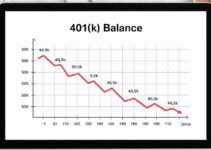
A true, systemic economic crash is much more insidious. A systemic crash is the destruction of purchasing power and corporate profit margins. It occurs when the fundamental building blocks of the economy—energy, supply chains, and the national currency—are structurally compromised. Your 401(k) balance might technically stay the same on your computer screen, but if the cost of living doubles and companies cannot afford to manufacture their products, your wealth has effectively crashed.
The ongoing war with Iran is not just a geopolitical crisis; it is a mathematical catalyst designed to trigger this exact type of systemic failure.
The Triple Threat: How the War Hits Home
Unlike a localized recession triggered by bad bank loans or a housing bubble, a war in the heart of the Middle East attacks the U.S. economy on three distinct, interconnected fronts. This conflict represents a “Triple Threat” to your retirement savings:
-
The Energy Shock: Iran’s greatest asymmetric weapon is its geography. By threatening the global oil supply and targeting regional energy infrastructure, the conflict threatens to inject massive, unavoidable inflation directly into the American supply chain.
-
The Debt Spiral: Dropping bunker-buster bombs and deploying carrier strike groups costs billions of dollars. The Pentagon blew through an estimated $3.7 billion in just the first 100 hours of the conflict. To fund an open-ended war, the government must print massive amounts of fiat currency, diluting the value of every dollar you have saved.
-
Supply Chain Contagion: As the Middle East destabilizes, global maritime routes fracture. Skyrocketing shipping insurance and rerouted trade lanes crush corporate profit margins, leading to widespread layoffs and stagnant economic growth right here at home.
When you combine an energy shock with a debt spiral and fractured supply chains, you create a perfect storm for a financial disaster.
The Energy Crisis & The Strait of Hormuz Chokepoint
When assessing the economic fallout of Operation Epic Fury, amateur analysts often focus entirely on the military hardware—the cost of replacing Tomahawk missiles and deploying aircraft carriers. But the true threat to the U.S. economy does not come from the Pentagon’s budget. It comes from the global energy market.
Iran’s greatest asymmetric weapon against the West is not its ballistic missile stockpile; it is pure geography.
The Geography of Oil: The Ultimate Chokepoint
To understand why the 2026 conflict is an economic powder keg, you only need to look at a map of the Persian Gulf. At the southern edge of Iran lies the Strait of Hormuz. This narrow body of water is the single most critical energy chokepoint on the planet.
Historically, roughly 20% to 30% of the world’s total daily oil consumption—tens of millions of barrels—must pass through this 21-mile-wide strait every single day. The oil that powers the economies of Asia, Europe, and massive segments of the global supply chain flows directly past Iranian military installations.
As the U.S. and Israel escalate their bombardment, Iran’s most devastating retaliatory move is to weaponize this strait. Whether through deploying naval mines, utilizing fast-attack drone swarms against commercial tankers, or directly striking the oil infrastructure of neighboring Gulf Arab states, disrupting the Strait of Hormuz instantly paralyzes the global energy matrix.
The Price Shock Mechanism
What happens mathematically to the global economy when a warzone envelops the world’s largest oil artery? It triggers an instantaneous price shock.
Commercial oil tankers are operated by private corporations. These corporations rely on maritime insurance to move billion-dollar cargoes. The moment missiles start flying across the Persian Gulf, maritime insurance premiums skyrocket—often jumping by hundreds of thousands of dollars per voyage. If the risk becomes too great, insurance companies simply refuse to underwrite the journey, and the tankers stop moving altogether.
When tankers refuse to transit, the global supply of oil violently contracts overnight. Financial markets operate on the unbreakable law of supply and demand. If the world suddenly loses 20% of its daily energy supply, the price of the remaining oil must surge to compensate. This is why the mere threat of a closed strait can push crude oil past $100 a barrel, and a sustained closure threatens to push prices toward a catastrophic $150 or more.
The Inflation Domino Effect
The terrifying reality for the American consumer is that an oil shock does not stay confined to the gas pump. Oil is the foundational building block of the entire physical economy.
If crude oil spikes to $150 a barrel, the price of diesel fuel goes parabolic. Diesel is the lifeblood of the U.S. supply chain. It powers the massive cargo ships that bring goods to our ports, the freight trains that cross the country, and the 18-wheelers that deliver food to your local grocery store. It also powers the heavy agricultural equipment used to harvest every crop we eat.
When diesel prices skyrocket, the cost to manufacture, transport, and harvest every physical product in America rises mathematically.
This triggers a massive Inflation Domino Effect. Corporations are forced to pass these skyrocketing transportation costs onto the consumer to protect their profit margins. Just as the U.S. economy was hoping to escape the “sticky inflation” of the early 2020s, a Middle Eastern energy shock reignites the fire, forcing the cost of groceries, consumer goods, and raw materials to completely unmanageable levels.
This is not a theoretical market correction; it is a structural, hyper-inflationary tax levied directly on the middle class.
The Federal Reserve’s Impossible Dilemma (Stagflation 2.0)
When the economy faces a crisis, mainstream financial advisors always tell their clients the same comforting lie: “Don’t panic, the Federal Reserve will step in and fix it.” For the last two decades, this was technically true. When the dot-com bubble burst, when the 2008 housing market collapsed, and when the 2020 pandemic hit, the Federal Reserve simply printed trillions of dollars and slashed interest rates to zero. That artificial flood of cheap money bailed out the stock market and saved paper portfolios.
But Operation Epic Fury has fundamentally broken that playbook. The 2026 war in Iran has boxed the Federal Reserve into an impossible, mathematical nightmare known as the Dual Mandate Trap.
The Dual Mandate Trap
The Federal Reserve is legally tasked with a “dual mandate”: keeping prices stable (fighting inflation) and maximizing employment (preventing a recession).
Normally, these two goals are somewhat balanced. But an energy shock triggered by a Middle Eastern war rips them violently apart.
-
To Fight Inflation: Because the war is driving oil and diesel prices into the stratosphere, inflation is surging. The only tool the Fed has to fight inflation is to raise interest rates. But raising rates crushes consumer spending, destroys corporate borrowing, and triggers a severe recession.
-
To Fight a Recession: Meanwhile, skyrocketing energy costs and fractured supply chains are already causing corporations to lay off workers and freeze expansion. The economy is slowing down fast. The Fed’s normal response to a slowing economy is to cut interest rates to stimulate growth.
The Fed is trapped. If they raise rates to fight the oil shock, they plunge the U.S. into a devastating depression. If they cut rates to save the stock market, they pour gasoline on the inflation fire, potentially driving the cost of living to hyper-inflationary levels. There is no mathematical escape; one side of the mandate must be sacrificed.
The 1970s Parallel: The Return of Stagflation
We do not have to guess what happens when a Middle Eastern conflict creates an oil shock while the Federal Reserve is trapped. We only have to look at the 1970s.
In 1973, the Arab Oil Embargo crippled the U.S. energy supply. A few years later, the 1979 Iranian Revolution triggered a second massive oil shock. The result was the most economically devastating decade of the 20th century: Stagflation.
Stagflation is the absolute worst-case scenario for a modern economy. It is the toxic combination of stagnant economic growth (recession and high unemployment) simultaneously occurring with rampant, double-digit inflation.
During the 1970s stagflation crisis, the stock market went effectively nowhere for a decade in real terms. Bond yields were vaporized by inflation. The purchasing power of the American middle class was gutted. The 2026 conflict in Iran is perfectly engineering the exact same macroeconomic conditions, but this time, the U.S. has vastly more national debt.
Wartime Deficit Spending: Fueling the Fire
The final nail in the coffin of the Fed’s dilemma is the sheer cost of Operation Epic Fury.
As the Pentagon burns through billions of dollars every week deploying missile defense systems and carrier strike groups to the Persian Gulf, the U.S. Treasury must issue massive amounts of new debt to pay the bills. The U.S. government is already drowning in historic debt levels; there is simply no tax revenue left to fund a new war.
Who buys that new wartime debt? The Federal Reserve. They are forced to monetize the debt by printing trillions of new fiat dollars out of thin air.
This creates a terrifying feedback loop: The war causes an oil shock that spikes inflation. The war also costs billions, forcing the government to print more money, which heavily dilutes the dollar and creates even more inflation. As the purchasing power of the currency collapses, the cost to fight the war increases, requiring even more printed money.
This is how an economy fundamentally crashes from the inside out.
Global Contagion & The Threat to the US Dollar
As of mid-March 2026, the economic shockwaves from Operation Epic Fury have officially left the Persian Gulf and are now battering the balance sheets of the S&P 500. While the “Energy Shock” is the primary driver of inflation, the secondary effects—Supply Chain Contagion and De-dollarization—are what turn a regional war into a systemic global crash.
Supply Chain Fractures & Margin Compression
The effective closure of the Strait of Hormuz has forced a global logistics emergency. With insurers cancelling “war-risk” coverage, major shipping lines like Maersk and Hapag-Lloyd have rerouted vessels away from the Gulf.
-
The Time Tax: Ships traveling from Asia to Europe are now forced to navigate around the Cape of Good Hope, adding 10 to 14 days to every voyage.
-
The Cost Tax: Rerouting adds approximately $1 million in fuel costs per ship. To maintain their profit margins, maritime carriers have introduced “conflict surcharges” ranging from $2,000 to $4,000 per container.
-
The Result: These costs act as a “shadow tax” on every industry. For the S&P 500, this means massive Margin Compression. When it costs 30% more to get parts for an iPhone or semiconductors for an EV, corporate earnings plummet. As earnings guidance for the rest of 2026 is slashed, the stock market enters a sustained, grinding bear market.
De-dollarization Acceleration (The BRICS Response)
The most dangerous long-term consequence of the Iran war is not the price of oil, but the accelerated death of the Petrodollar.
The U.S. and its allies have utilized “financial warfare”—sanctions and the freezing of assets—to cripple Iran’s economy. While effective in a military sense, this has terrified the BRICS nations (Brazil, Russia, India, China, and South Africa). Seeing the U.S. dollar used as a weapon, these nations are moving at lightning speed to finalize their alternative financial system: The Unit.
-
The Gold-Backed Pivot: In early March 2026, reports surfaced of a BRICS “digital trade currency” pilot, reportedly backed by a basket of 40% gold and 60% national currencies.
-
The Oil Trade Shift: China and India, which together import nearly 40% of their energy through the now-blocked Strait of Hormuz, are increasingly seeking to settle oil trades in Yuan or Rupees rather than U.S. dollars to bypass Western-controlled banking channels.
-
The Dollar Dump: As global demand for the dollar as an energy-settlement currency drops, foreign central banks begin “dumping” their U.S. Treasury holdings. This floods the market with excess dollars, further devaluing the currency and driving gold prices to record highs—already surpassing $5,300 per ounce this month.
The Liquidity Squeeze
In the first 96 hours of the blockade, global equity markets lost an estimated $3.2 trillion in value. This triggered a Liquidity Squeeze, where institutional investors were forced to sell everything—even their winning positions in gold and high-quality stocks—to meet margin calls on their failing energy and tech bets.
This initial crash catches amateur investors off guard, making them think “even gold is failing.” In reality, this is the final “wash out” before the true inflationary rally begins. Once the initial margin calls are met, capital flees paper assets entirely and moves into the only safe havens remaining: Physical hard assets.
Wealth Preservation Strategies for a Wartime Economy
As of March 12, 2026, the data is clear: the war in Iran is no longer just a “headline risk”—it is a structural economic shock. With oil prices consistently touching triple digits and the Strait of Hormuz effectively closed, the “inflationary fire” the Fed spent years trying to put out has been reignited.
For the retail investor, the danger is that the traditional “safe” moves are now the most dangerous traps. If you want to survive the 2026 wartime economy, you must shift your mindset from growth to Wealth Preservation.
1. The Cash & Bond Trap
In a normal recession, “Cash is King.” But in a wartime stagflationary environment, cash is a melting ice cube.
-
The Inflation Tax: If inflation hits 8% or 10% due to energy shocks, every dollar in your savings account loses 10% of its purchasing power annually.
-
The Bond Bloodbath: Long-term Treasury bonds are currently a “bearish” bet. As inflation expectations rise, bond yields must climb to compensate, which causes the actual price of the bonds you already hold in your 401(k) to plummet.
2. The Physical Firewall: Why Hard Assets Win
Historically, physical gold and silver are the only assets that carry zero counterparty risk during a geopolitical energy crisis. While the stock market is grappling with margin compression and supply chain fractures, gold is doing exactly what it did in the 1970s: re-rating its value to account for the diluted purchasing power of the dollar.
-
Gold vs. Silver in 2026: Since the strikes began on February 28, spot gold has vaulted from $5,100 to over $5,300 per ounce. Silver is even more explosive; while volatile, its industrial role in military hardware and the “green pivot” creates a supply deficit that provides a structural floor under its price.
-
The Scarcity Premium: Unlike the U.S. dollar, which can be printed to fund bunker-busters, the supply of gold is finite. In 2026, central banks are already expanding their reserves at record rates, competing with retail investors for the remaining physical supply.
3. Actionable Blueprint: The Gold IRA Strategy
If the majority of your wealth is sitting in a traditional 401(k) or IRA, you are entirely exposed to the “Triple Threat” of this war. The most effective way to protect your retirement is to legally move a portion of those funds into a Self-Directed Gold IRA.
-
Tax-Free Protection: You can roll over funds from a 401(k), TSP, or 403(b) into physical gold and silver without triggering tax penalties.
-
Diversification: Institutional research suggests an optimal wartime allocation of 5% to 15% in precious metals. This ensures that even if the S&P 500 enters a multi-year stagflationary “lost decade,” your physical holdings act as a ballast, absorbing the inflationary shock and preserving your total net worth.
Final Verdict: Don’t Wait for the “Official” Crash
The biggest mistake investors make is waiting for a formal declaration of an economic crash. By the time the news confirms the economy has “broken,” the physical supply of gold and silver will be depleted, and premiums will be astronomical.
The 2026 war in Iran has already altered the mathematical trajectory of the dollar. Secure your physical firewall now, while the markets are still liquid and the exits are still open.